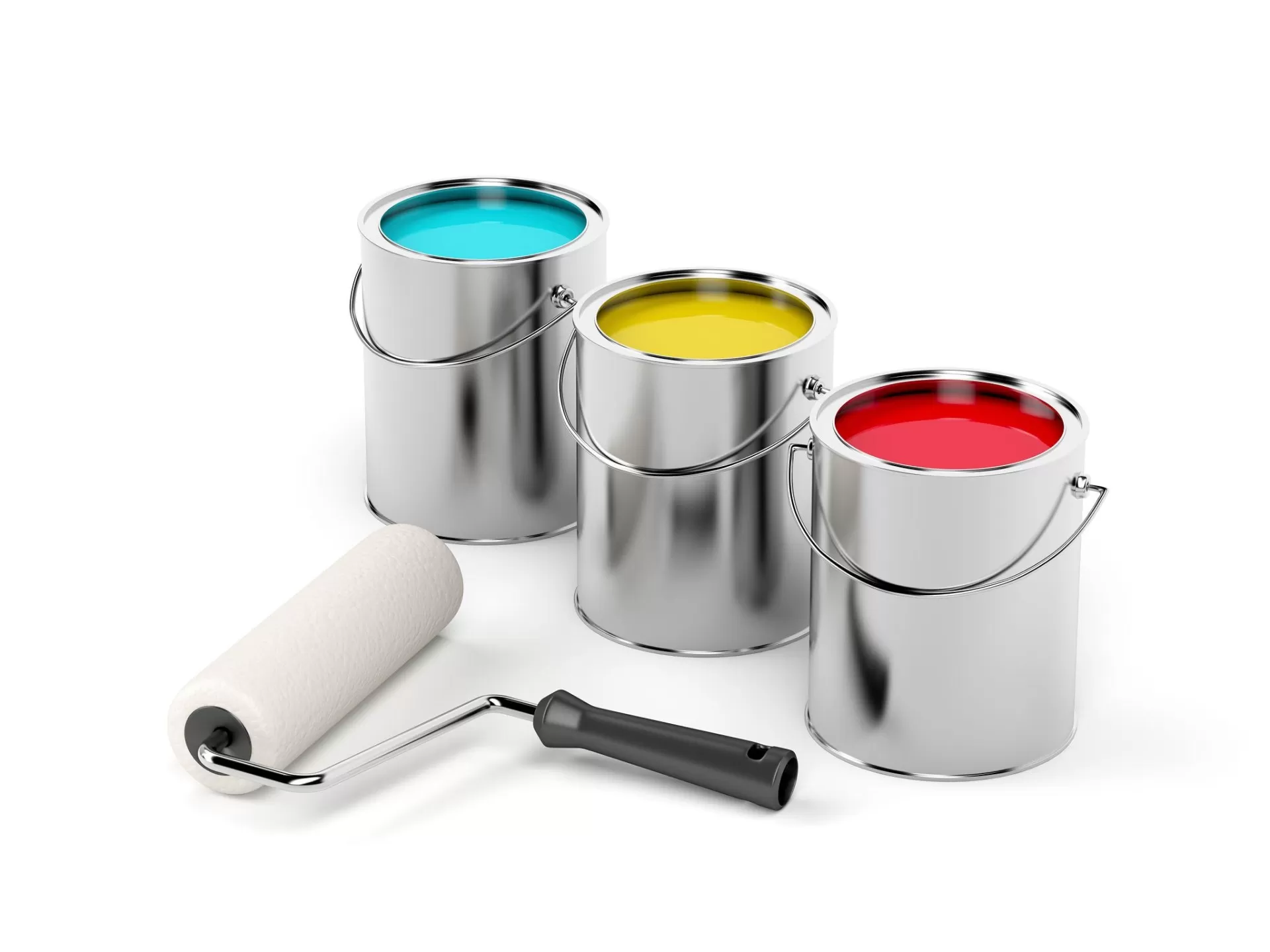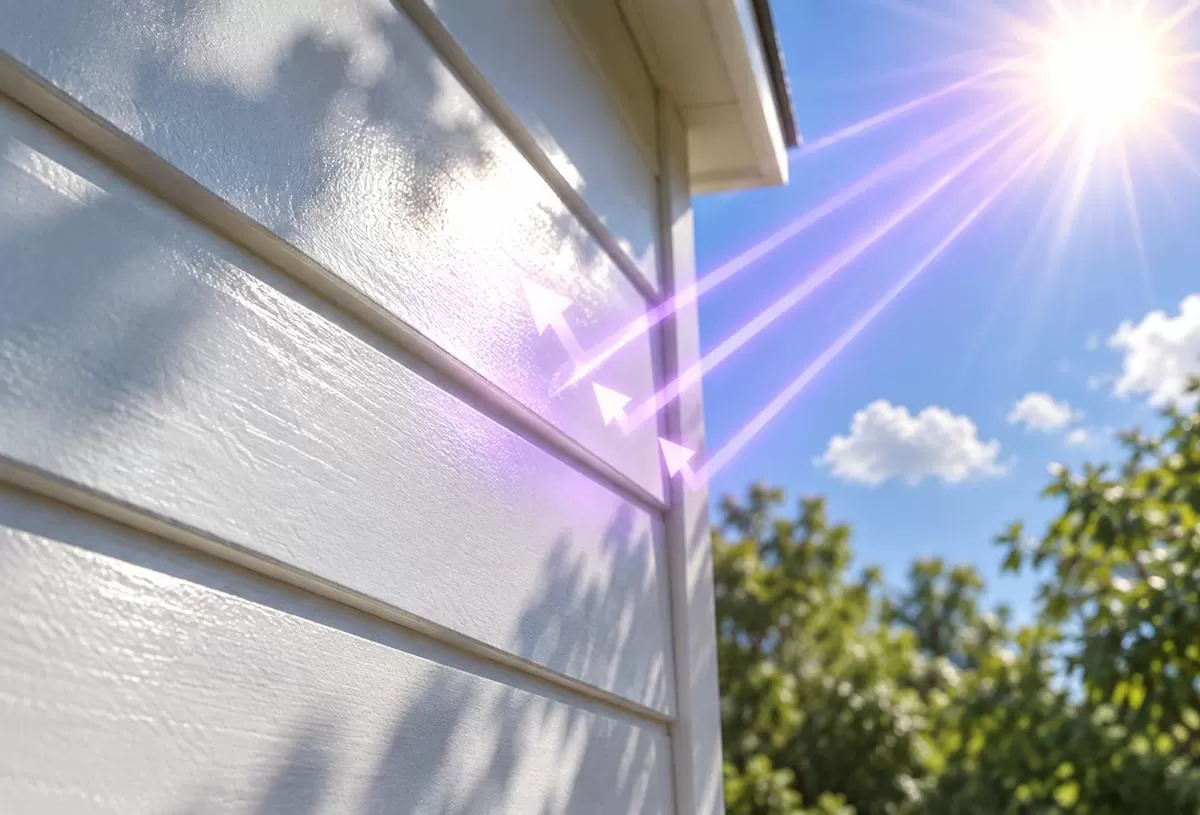
To limit these effects, the paint industry often uses UV-resistant additives in combination with resins, pigments and other additives in the formula. This is a group of additives that protect the paint film against the effects of ultraviolet radiation, thereby contributing to maintaining the color, gloss and durability of the coating in outdoor use conditions.
Choosing the right UV-resistant additive depends not only on the type of paint but also on the plastic system, color, climatic conditions, duration of outdoor use and durability requirements of the coating.
WHAT ARE UV RESISTANT ADDITIVES FOR PAINT?
UV-resistant additives for paint are substances added to paint formulas to limit the deterioration of the paint film due to the impact of ultraviolet rays.
When paint is exposed to sunlight for long periods of time, UV photons can provide enough energy to promote the breakdown of some chemical bonds in the polymer. This process can lead to oxidation reactions and polymer chain decomposition, changing the structure and properties of the paint film.
UV-resistant additives are used to reduce the rate of these processes. Depending on the type of additive, they can absorb UV rays, reduce UV energy reaching the polymer or limit oxidation reactions created by photochemical processes.
In reality, paint film protection systems often do not only use a single substance but can combine many different mechanisms to achieve more stable results.
HOW DO UV RAYS AFFECT PAINT FILM?
Sunlight includes many different wavelength ranges. In particular, ultraviolet rays have higher energy than visible light and are capable of promoting photochemical reactions in polymer materials.
With long-term exposure to UV rays, some plastics can undergo decomposition or oxidation. The consequences can be manifested by color changes, reduced gloss and deterioration of the mechanical properties of the paint film.
Some common phenomena on outdoor paint include fading, loss of shine, surface chalking, brittleness, cracking or reduced adhesion. The degree of influence depends on the type of resin, pigment, formulation quality and environmental conditions.
This is why two paints that have similar colors but use different resin systems and formulations can have very different color retention outdoors.
WHAT TYPES OF UV RESISTANT ADDITIVES ARE THERE?
In paint formulations, substances that protect against the effects of light are often divided into several main groups. Two important groups commonly used are UV Absorbers and Hindered Amine Light Stabilizers (HALS).
These two groups work by different mechanisms but can be used in combination to increase paint film protection.
UV ABSORBER – UV ABSORBER
UV Absorber works by absorbing a portion of UV radiation before the energy directly impacts sensitive components in the polymer film.
The absorbed energy is converted according to the appropriate mechanism for each type of substance, thereby reducing the impact of UV radiation on the polymer. Thanks to this, the photodegradation of plastics and pigments can be limited.
UV Absorber is often of interest in paint systems that require color retention, gloss retention and long-term appearance maintenance, especially for outdoor coatings.
HALS LIGHT STABILIZER
HALS (Hindered Amine Light Stabilizers) are a group of light stabilizers widely used in a variety of polymer materials and coatings.
The protection mechanism of HALS is different from UV Absorber. Instead of primarily absorbing UV radiation, HALS helps limit and control free radicals that form during photoaging of polymers.
Thanks to its ability to control oxidation processes associated with free radicals, HALS can help prolong the life of paint films when exposed to light and weather.
In many outdoor paint systems, UV Absorber and HALS can be used in combination to protect the paint film by complementary mechanisms.
HOW ARE UV ABSORBER AND HALS DIFFERENT?
It can be simply understood that UV Absorber focuses on reducing the amount of UV radiation affecting the polymer, while HALS focuses more on controlling photochemical oxidation processes involving free radicals.
Therefore, choosing between the two groups should not be based solely on the question of which type is “stronger.” Actual effectiveness depends on the type of resin, pigment, solvent system, film thickness, usage conditions and coating longevity requirements.
In paint systems requiring high weather resistance, combining two groups of additives is often considered to create a more comprehensive protection system.
DO UV RESISTANT ADDITIVES HELP PAINT FROM FADE?
Yes, but it is necessary to properly understand the role of additives.
UV-resistant additives can help slow down fading and visual deterioration, but do not mean that the paint will remain completely unchanged during outdoor use.
Color fastness also depends greatly on the type of pigment. A resin system has good weather resistance but using pigments with low light fastness can still cause color change.
Therefore, to create an outdoor paint system with high color fastness, it is necessary to consider at the same time "resin + pigment + anti-UV additive + anti-oxidant additive + paint film structure".
DO UV RESISTANT ADDITIVES HELP PAINT RETAIN SHINE?
One of the noticeable signs of outdoor aging is loss of shine. As the surface structure and polymers in the paint film are altered, the surface can become rougher and its ability to reflect light changes.
Using a suitable light stabilization system can help slow down this process, thereby contributing to maintaining the gloss of the coating for a longer period of time.
For paints that require high visual appearance such as automotive paint, outdoor industrial paint, metal paint, plastic paint and high-end decorative paint, the ability to maintain gloss is often one of the important criteria when evaluating weather durability.
WHAT TYPES OF PAINT ARE UV RESISTANT ADDITIVES USED FOR?
UV resistant additives can be used in many different paint and coating systems, especially those requiring outdoor use.
1. Outdoor industrial paint
Steel structures, machinery, equipment, tanks, factories and many industrial projects are often exposed to direct sunlight. The protective coating system needs to maintain color and film properties over a long period of time.
UV resistant additives can be used to increase the coating's resistance to light aging, in combination with other anti-corrosion and weather protection solutions.
2. Automotive paint and vehicle coatings
Appearance is a very important factor for car paint. Vehicles are constantly exposed to sunlight, temperature changes, rainwater and many environmental factors.
Coating systems for automobiles therefore often require high color retention and gloss. Light-stabilizing additives can be used in the top coat to contribute to the protection of the paint system.
3. Plastic paint
Some plastic products used outdoors also have high requirements for color fastness and aging resistance. In these cases, the choice of UV Absorber or HALS needs to take into account both the base polymer and the pigment.
4. Paint outdoor wood
Outdoor furniture is often affected by UV rays, water and temperature changes. When choosing a coating, UV resistance is one of the factors to consider to maintain the color and appearance of the surface.
CAN UV RESISTANT ADDITIVES FOR PAINT BE USED FOR ALL TYPES OF PLASTIC?
This is a very important point when developing paint formulas. An additive that works well in one plastic system may not have the same effectiveness in another plastic system.
Plastic systems such as acrylic, polyurethane, polyester, alkyd, and epoxy have different chemical structures and aging mechanisms. Therefore, additive manufacturers often have grades designed or recommended for each specific application group.
In addition to UV protection, additive compatibility with resin systems, solvents, pigments and other additives in the formulation should be checked.
HOW TO CHOOSE AN ANTI-UV ADDITIVE FOR PAINT?
When choosing additives, it is first necessary to determine the type of paint and resin system being used. This is the basis for identifying compatible UV Absorber or HALS types.
Next, it is necessary to determine the conditions of use. Paint used outdoors in areas with high radiation intensity will have different requirements than paint used indoors. The desired lifespan also directly affects the choice of additive system.
In addition, it is necessary to consider the paint color, pigment type, film thickness, application method and gloss requirements. For paint systems with sensitive colors or requiring long-term appearance, optimizing the light stability system is even more important.
SHOULD THE HIGHER CONTENT OF UV RESISTANT ADDITIVES BE BETTER?
Increasing additive content does not mean that UV protection effectiveness will increase indefinitely. Each type of additive has a suitable concentration range and optimal effectiveness depends on the overall formula.
If used too low, the protection effect may not meet the requirements. On the contrary, using too much can increase costs or affect some properties of the paint system, depending on the type of additive and formulation.
Therefore, instead of only paying attention to the price of additives per kilogram, manufacturers should evaluate the cost per unit of paint and the effectiveness of extending coating life.
CAN UV RESISTANT ADDITIVES BE COMBINED WITH ANTIOXIDANTS?
In many polymer and coating systems, outdoor aging involves light, oxygen and heat simultaneously. Therefore, a stable system can use many different protection mechanisms.
UV Absorber and HALS are two groups commonly of interest in photoprotection, while antioxidants may play additional roles in limiting oxidation.
However, the coordination needs to be tested for compatibility and practical effectiveness. Do not simply add many types of additives without evaluating the impact on the entire paint system.
CAN UV-RESISTANT ADDITIVES REPLACE WEATHER-PROOF PLASTIC?
Additives are just one ingredient in the paint formula, and cannot completely replace the role of a base resin with good weather resistance.
If the plastic system has low outdoor durability, adding UV-resistant additives can help improve durability but cannot turn an inherently unsuitable plastic system into a coating system with outstanding weather durability.
Therefore, to develop long-lasting outdoor paint, it is necessary to start from choosing a suitable base resin, then optimize pigments, light stabilizers, antioxidants and other ingredients.
HOW TO CHECK THE EFFECTIVENESS OF AN ANTI-UV ADDITIVE?
The effectiveness of an additive system should not be assessed solely by short-term observation. With outdoor paint, aging tests appropriate to the intended use should be performed.
Some evaluation methods may focus on color changes, gloss, chalking, cracking, peeling and mechanical changes of the paint film after exposure to aging conditions.
Accelerated aging tests in the laboratory can be used to compare different formulations. However, acceleration test results should be interpreted appropriately and should not be simply converted to a number of years of outdoor use without a reliable correlation.
UV-resistant additives for paint play an important role in protecting the paint film against the effects of ultraviolet radiation and photoaging. Two commonly used groups are UV Absorber and HALS, each of which has a different protection mechanism and can be combined to increase the effectiveness of light stabilization.
However, the UV durability of a paint system does not depend on the additive alone. Resin type, pigment, film thickness, environmental conditions, quality of application and additive system all affect the longevity of the coating.
For outdoor paints, automotive paints, industrial paints, plastic paints and coatings that require high color fastness, choosing the right UV resistant additives right from the formula development stage can help maintain the color, gloss and appearance of the product for a longer period of time.
>> See more UV-resistant additive Tinuvin 1130 <<
>> See more Anti-UV additive for plastics <<
>> See more Epoxy resin <<
>> See more Epoxy curing <<
MEGA VIETNAM GENERAL TRADING COMPANY LIMITED
Address: Floor 2-A2-IA20, Nam Thang Long Urban Area, Ward. Pham Van Dong, Phu Thuong Ward, City. Hanoi.
Email: contact@megavietnam.vn; Tel: (+84) 24 375 89089;
Website: megavietnam.vn; Hotline: 1800.577.728; Zalo: 0971.023.523