WHAT IS EPOXY RESIN?
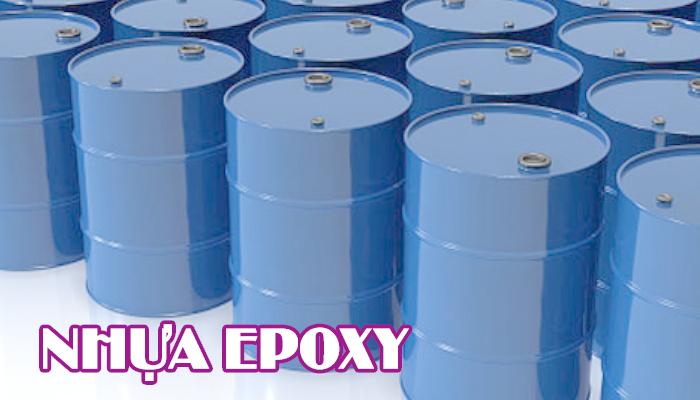
Epoxy resin is a thermosetting polymer, formed from the reaction between epoxy resin and hardener. When these two components combine, they undergo polymerization, creating an extremely stable cross-linked network structure that cannot be melted or reused with heat.
The special feature of epoxy is that after complete curing, this material turns into a hard, stable state and has a very high bearing capacity. This is the reason why epoxy is widely used in environments that require long-term durability.
STRUCTURAL COMPONENTS OF EPOXY PLASTIC
Epoxy resin usually consists of two main components: the base resin and the curing agent, each component plays an important role in determining the quality of the final product. The base resin contains reactive epoxide groups, while the curing agent (usually an amine or anhydride) helps trigger the chemical reaction to form the solid material.
The mixing ratio between these two components needs to be precisely controlled, because deviations can lead to incomplete curing, reducing the durability and aesthetics of the product.
HIGHLIGHTS FEATURES OF EPOXY PLASTIC
Epoxy resin possesses many outstanding properties that make it a popular material in many fields. First of all, extremely good adhesion helps epoxy firmly bond to many types of surfaces such as metal, concrete, wood or plastic, limiting peeling during long-term use.
Besides, epoxy has high hardness and mechanical strength, helps to withstand force and impact effectively, suitable for industrial projects or areas with heavy loads. In addition, chemical resistance, waterproofing and corrosion resistance help epoxy work well in harsh environments such as factories, laboratories or outdoor areas.
Another important advantage is its good electrical insulating ability, helping epoxy to be widely used in the field of electricity and electronics, especially in protective coating of circuit boards and components.
CLASSIFICATION OF EPOXY RESINS
On the market today there are many different types of epoxy resins, designed to suit each specific use. Bisphenol A-based epoxy is the most popular type, often used in coatings and adhesives thanks to its reasonable price and stable performance.
In addition, novolac epoxy is improved to better withstand heat and chemicals, suitable for heavy industrial environments. Water-based epoxy is more environmentally friendly, reduces odor and is safe for the installer, while UV epoxy has the ability to cure quickly when exposed to UV rays, suitable for high-speed production.
APPLICATION OF EPOXY RESIN
Epoxy resin is present in many areas of life and production. In the construction industry, epoxy is used as floor paint for factories, hospitals, and basements thanks to its effective strength and dust resistance. In industry, epoxy is an important component of composite materials such as fiberglass or carbon fiber, helping to increase durability and reduce product weight.
In addition, epoxy is also used in high-tech adhesives, ensuring a strong bond between materials. In the field of decoration, epoxy is used to create resin tables, art paintings or handicraft products with a transparent and highly aesthetic effect.
DISADVANTAGES OF EPOXY RESIN THAT NEED TO BE NOTED
Despite many advantages, epoxy resin still has some limitations that users need to consider. After curing, epoxy often has a certain brittleness and can crack if subjected to strong bending or impact for a long time.
In addition, the construction process requires high technical requirements, especially the correct mixing ratio and environmental temperature control. The cost of epoxy is also higher than some other types of plastic, and in its uncured state, this material can cause skin irritation if protective gear is not used.
HOW TO CHOOSE THE SUITABLE EPOXY RESIN
To choose type epoxy resin If appropriate, users need to clearly determine the purpose of use such as floor paint, glue or art molding. For industrial floor paint, you should choose epoxy with high mechanical durability and abrasion resistance, while decorative products should prioritize transparency and good self-leveling ability.
In addition, choosing reputable suppliers and products with clear origins is also an important factor to ensure the quality and long-term durability of the project.
>> See more Epoxy resin SM828 <<
>> See more YD 128 epoxy resin <<
>> See more Epoxy curing <<
>> See more Promote vulcanization <<
MEGA VIETNAM GENERAL TRADING COMPANY LIMITED
Address: Floor 2-A2-IA20, Nam Thang Long Urban Area, Ward. Pham Van Dong, Phu Thuong Ward, City. Hanoi.
Email: contact@megavietnam.vn; Tel: (+84) 24 375 89089;
Website: megavietnam.vn; Hotline: 1800.577.728; Zalo: 0971.023.523