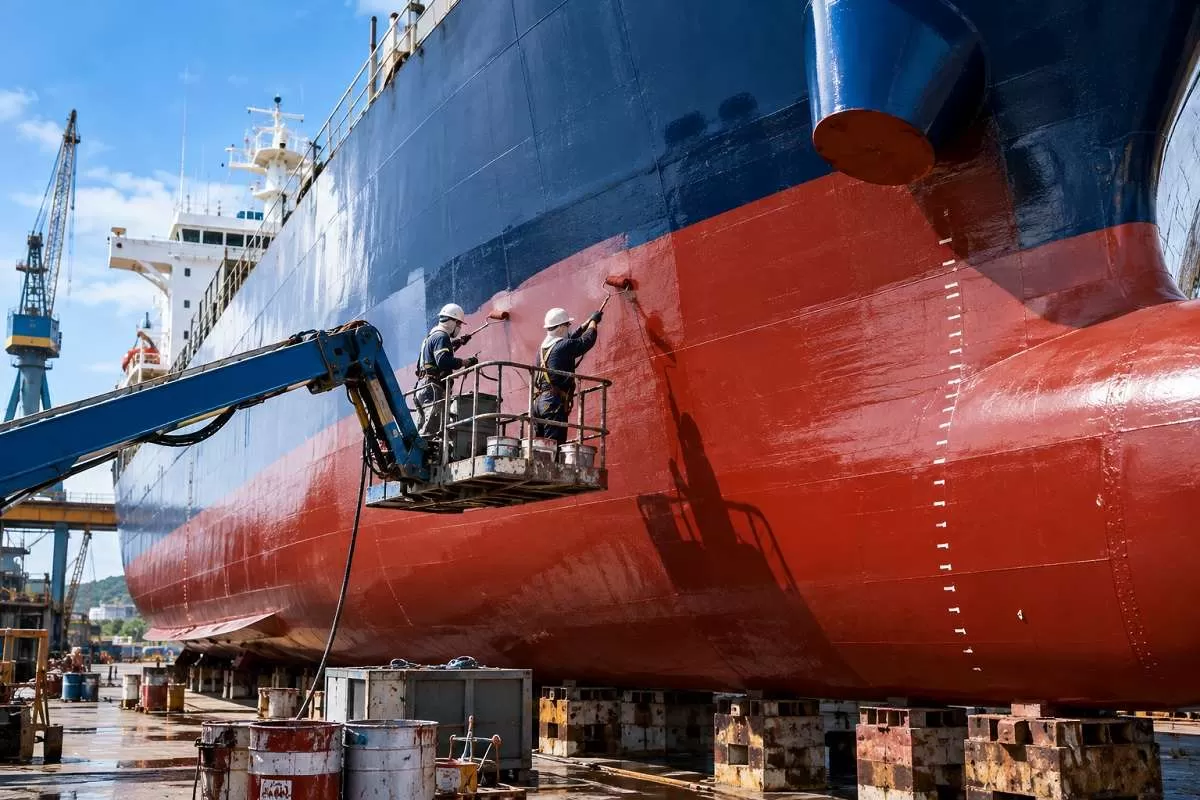
Along with increasing requirements for energy efficiency and environmental protection, the new generation of marine paints is shifting from the main goal of anti-corrosion to multi-functional coating systems: controlling fouling organisms, reducing frictional resistance, extending maintenance cycles, reducing VOC emissions and limiting substances potentially harmful to the marine environment.
WHAT IS NEW GENERATION SHIP PAINT?
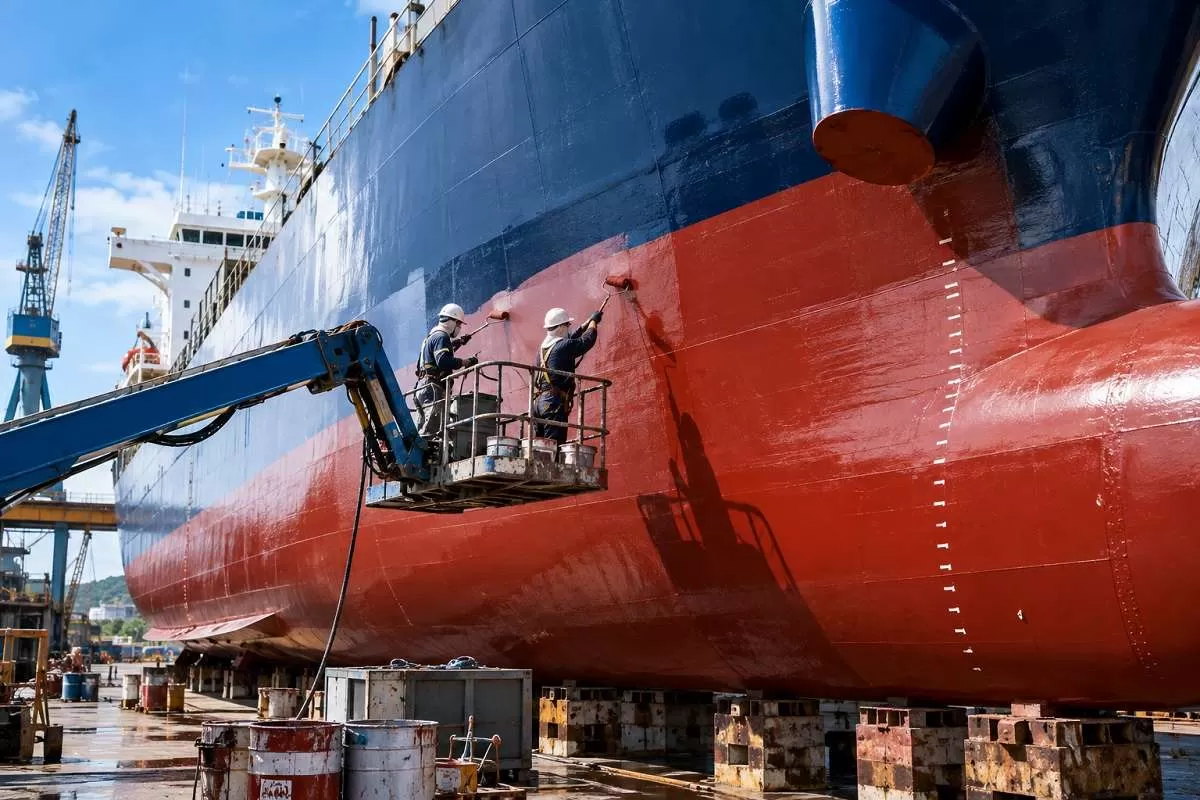
New generation ship paint can be understood as a group of paint and coating systems developed to simultaneously meet many strict requirements of the maritime industry, instead of just focusing on anti-rust ability. A modern paint system can perform many tasks such as anti-corrosion, marine biofouling, smooth surface maintenance, abrasion resistance and weather resistance.
In particular, the part of the ship's hull below the water level has a direct effect on the resistance when the ship moves. When marine life clings to the ship's hull, the surface becomes rougher, increasing drag and possibly causing the ship to consume more energy. IMO also determined that biofouling can affect the energy efficiency of ships, and that controlling biofouling is also meaningful in limiting the spread of alien species.
WHY DOES THE MARINE INDUSTRY NEED TO PAINT SHIP WITH NEW TECHNOLOGY?
Ships operate in much harsher environments than structures on land. Seawater contains salt and many ions that can promote metal corrosion, while the ship's hull is subject to the constant effects of water currents, waves, temperature, pressure and wet-dry cycles.
Besides, a ship can operate in many sea areas with different temperatures, salinities and densities of organisms. IMO says the level of biofouling depends on the route, water temperature, salinity, time the ship is anchored, operating speed, ship design and condition of the antifouling system.
Therefore, new generation marine paints need to have long-term durability and the ability to adapt to actual operating conditions, instead of only being effective in initial testing conditions.
HIGH PERFORMANCE ANTI-CORROR PAINT
Anti-corrosion paint is one of the most important layers of a ship's paint system. The goal is to create a barrier that prevents water, oxygen and corrosive agents from reaching the steel substrate, while maintaining adhesion over a long period of time.
Epoxy systems, modified epoxy and high-performance anti-corrosion paint technologies are often used as primer or intermediate coating depending on the paint system design. For ships, the durability of the coating system not only depends on the type of resin but is also closely related to surface preparation, dry film thickness, construction conditions and compatibility between layers.
ANTI-HA PAINTING – IMPORTANT INGREDIENTS OF NEW GENERATION SHIPPING PAINT
If anti-corrosion paint mainly protects metal, antifouling paint focuses on the part of the ship's hull exposed to sea water. This coating is intended to limit algae, barnacles, clams and other organisms from sticking to the surface of the ship's hull.
This is an important issue not just because of aesthetics. Biofouling increases the roughness of the hull, thereby increasing drag and affecting operating performance. IMO also emphasizes that good biofouling control can contribute to improved fuel efficiency and reduced greenhouse gas emissions.
SELF-POLISHING TECHNOLOGY IN ANTI-FOAM PAINT
An important development direction of the new generation of antifouling paint is self-polishing technology, often called self-polishing antifouling. When exposed to seawater, the coating can undergo controlled hydrolysis or dissolution, helping the surface to be continuously renewed during ship operation.
This approach helps maintain a relatively stable surface over long periods of time and aids in controlling biofouling. Self-polishing systems based on silicone acrylate or silyl methacrylate have been researched and commercialized, while new research continues to search for self-polishing plastic systems with low or no metal content.
ANTI-HAUL PAINT REDUCES FRICTION – AN IMPORTANT DIRECTION FOR MARINE
A notable development is moving from the concept of "anti-fouling" to "anti-fouling combined with reduced friction". The smoother and less biofouled the hull surface is, the lower the hydrodynamic drag, which in turn can contribute to reducing the energy needed to maintain speed.
Some commercial coating systems today use self-polishing technology and low-friction surface designs. For example, Jotun introduces SeaQuantum Plus III as a self-polishing silyl methacrylate antifouling paint system that aims to reduce hull friction resistance and improve energy efficiency.
This shows that marine paint is moving from a passive protective material to a component that can contribute to the operational performance of the entire ship.
SILICONE PAINT AND FOULING-RELEASE TECHNOLOGY
Another approach is fouling-release coating, in which the surface is designed to be difficult for marine life to adhere to and easily removed when the ship moves. Silicone and low surface energy materials are well-researched platforms in this field.
Recent research has also developed superhydrophobic silicone systems that do not use biocide and incorporate nanomaterials such as graphene to create anti-stick and self-cleaning surfaces. This is a notable research direction for new generation ship paints because it can reduce dependence on biocide release mechanisms.
TRENDS IN REDUCTION OF HARMFUL SUBSTANCES IN ANTI-FOUEL PAINTS
One of the important changes in ship painting technology is the increasing requirements for marine environmental safety. In the past, some antifouling systems used compounds that could potentially have serious impacts on the ecosystem.
IMO has issued the AFS Convention to control antifouling systems containing harmful substances. This Convention prohibits the use of biocidal organotin compounds in antifouling systems; Control requirements for cybutryne biocide also came into effect on January 1, 2023.
Therefore, the current trend is not only to find effective antifouling agents but also to find ways to control biofouling with lower environmental impact.
NEW GENERATION SHIP PAINT AND VOC REDUCE TREND
Besides the marine environment, the paint industry is also under pressure to reduce emissions of VOCs - volatile organic compounds during the production and construction process. This is driving the development of lower VOC paint systems, water-based paints in appropriate applications and high solids formulations.
It should be noted that VOC requirements do not mean that all marine paints must be converted to water-based paints. Each coating has different technical requirements, so the practical trend is to optimize the entire formulation to achieve a balance between protective performance, workability, durability and environmental impact.
PLASTIC FOR SHIP PAINT – THE FOUNDATION THAT DECIDES COATING QUALITY
In marine paint formulas, resin acts as a film-forming ingredient and has a great influence on the adhesion, mechanical strength, water resistance, chemical resistance and weather durability of the paint layer. Therefore, when developing a new generation of marine paints, choosing the right resin is as important as choosing pigment or additives.
Depending on the location and function of the coating, manufacturers can research systems epoxy resin, polyurethane, acrylic, vinyl and modified copolymers. In particular, with antifouling paint, the plastic structure can also be designed to control the rate of hydrolysis, self-polishing or create a surface with fouling-release properties. The 2026 study on metal-free self-polishing plastics is an example of this development.
SHIP PAINTING SYSTEMS OFTEN CONSIST OF MANY LAYERS
A ship is not protected by a single coat of paint. Depending on the design and area of use, the system may include surface treatment, anti-corrosion primer, intermediate layer, antifouling layer and finishing layer.
Each layer undertakes a separate task and must be compatible with adjacent layers. For example, the primer layer needs to create adhesion and protect the steel substrate; Intermediate layer increases thickness and protection; antifouling layer controls marine life; while topcoat can take care of color, weather resistance and protect the layers below.
NEW GENERATION SHIP PAINT IS NOT JUST FOR SHIP HUNS
In addition to the outer body, specialized paint is also used for many other areas of the ship such as decks, tanks, cargo holds, machinery areas, pipes, chemical resistant areas and auxiliary steel structures.
Each location has different working conditions, so the requirements for plastic, hardness, chemical resistance, abrasion resistance and heat resistance are also different. Therefore, the concept of "ship paint" actually includes a very wide ecosystem of specialized coatings, not a single formula.
HIGH DURABILITY REDUCES MAINTENANCE COSTS
A good marine paint system is not only evaluated by the initial purchase price. Actual costs also include train downtime, surface cleaning costs, repainting, repairs and losses due to reduced operating efficiency.
If the coating system can maintain its anti-corrosion and anti-fouling properties longer, the maintenance cycle can be more optimized. This is why high-solids, self-polishing, low-friction and fouling-release technologies are increasingly of interest in marine applications.
TREND OF COMBINATION OF ANTI-FOAMING AND FUEL SAVING
In the past, antifouling was often viewed primarily from the perspective of protecting the ship's hull. Currently, energy efficiency is becoming one of the important criteria when evaluating coating technology.
When the hull is clean and the surface is suitably smooth, drag can be better controlled. IMO has shown the link between biofouling management, fuel efficiency and greenhouse gas emissions; Several commercial coating systems today also claim to reduce drag and energy consumption.
NEW GENERATION SHIP PAINT AND NANO MATERIAL TECHNOLOGY
One research direction that is of interest is introducing nanomaterials into coatings to improve mechanical properties, corrosion resistance, hydrophobicity or adhesion resistance. Graphene, nano silica and some nanocomposites can be used to modify the structure and surface properties.
However, nanomaterials are not an automatic solution that guarantees high performance. Dispersibility, plastic compatibility, usage content, cost and stability in the marine environment all need to be evaluated. A 2024 study on silicone/graphene–SiC coatings shows that the development of biocide-free and superhydrophobic fouling-release coatings is continuing to be researched.
DEVELOPMENT TRENDS OF SHIP PAINTING IN THE COMING TIME
It can be seen that the new generation of marine paint technology is developing in many directions at the same time: better corrosion resistance, more effective biofouling control, reduced drag, extended service life and reduced impact on the environment.
Notably, IMO is currently continuing to develop a mandatory legal framework for biofouling management. At PPR 13 in February 2026, IMO said work on this legal framework was continuing, with the aim of moving towards an independent instrument and expected to complete the draft and recommendations around MEPC 89, mid-2029.
This shows that the requirements for antifouling paints in the future will not only revolve around “good antifouling” but will also consider environmental impact, the ability to control foreign organisms, cleaning efficiency and coating management throughout the entire life cycle of the ship.
HOW TO CHOOSE A SUITABLE SHIP PAINT?
There is no single new generation marine paint suitable for all locations. When choosing, it is necessary to determine in advance the area of use, base material, level of exposure to sea water, temperature, chemicals, vessel speed, berthing time and maintenance requirements.
For underwater hulls, special attention should be paid to anti-corrosion and anti-fouling systems; For decks, priority should be given to abrasion resistance and anti-slip properties; Tanks or chemical storage areas must choose a coating system with corresponding environmental resistance. The most important thing is to design the entire paint system to be compatible, instead of choosing individual products.
The new generation of marine paint is transforming from a simple protective material into a technical solution that can impact the durability, energy efficiency and sustainability of the ship. Technologies such as high-performance anti-corrosion paint, self-polishing antifouling, fouling-release, low-friction coating, silicone, functional plastics and nanomaterials are opening up many new development directions.
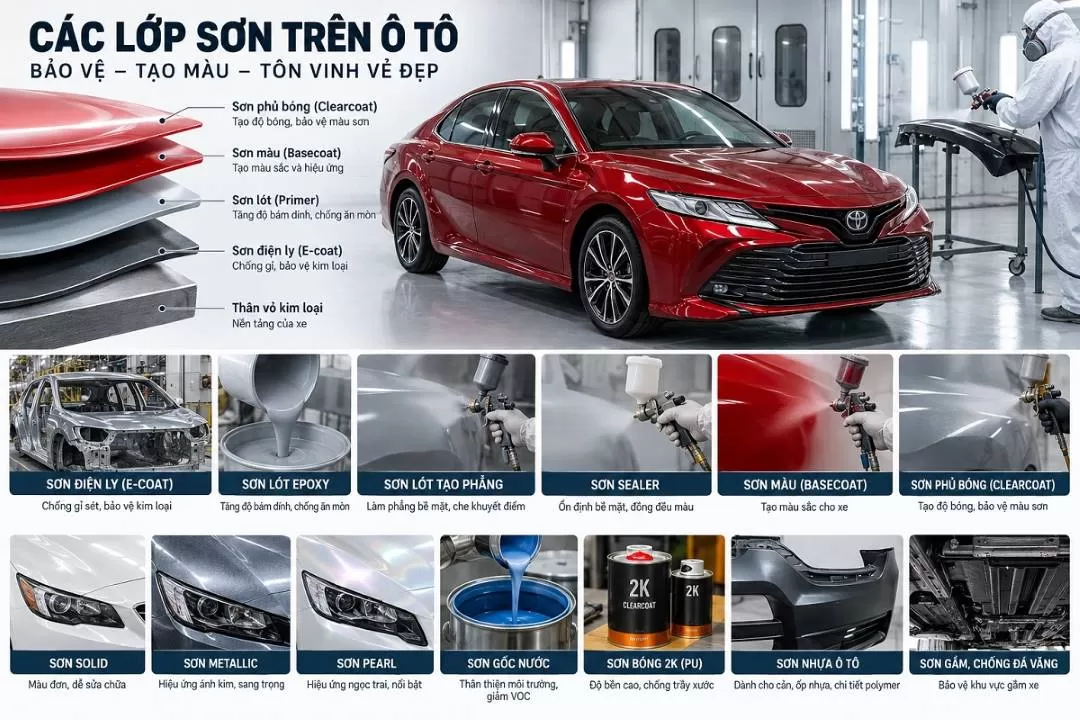
In which, Plastic for ship painting plays a particularly important role because it determines the paint film structure and many fundamental properties of the coating. The future trend will be towards plastic and coating systems that are both highly durable, effectively control biofouling, reduce friction and better meet environmental requirements. This is also an opportunity for paint material manufacturers to research epoxy, polyurethane, acrylic, silicone, vinyl and functional copolymer systems suitable for the new generation of marine coatings.
>> See more Plastic for ship painting <<
>> See more Plastic for car paint <<
>> See more Zinc stearate (wood paint additive) <<
>> See more Epoxy resin <<
MEGA VIETNAM GENERAL TRADING COMPANY LIMITED
Address: Floor 2-A2-IA20, Nam Thang Long Urban Area, Ward. Pham Van Dong, Phu Thuong Ward, City. Hanoi.
Email: contact@megavietnam.vn; Tel: (+84) 24 375 89089;
Website: megavietnam.vn; Hotline: 1800.577.728; Zalo: 0971.023.523