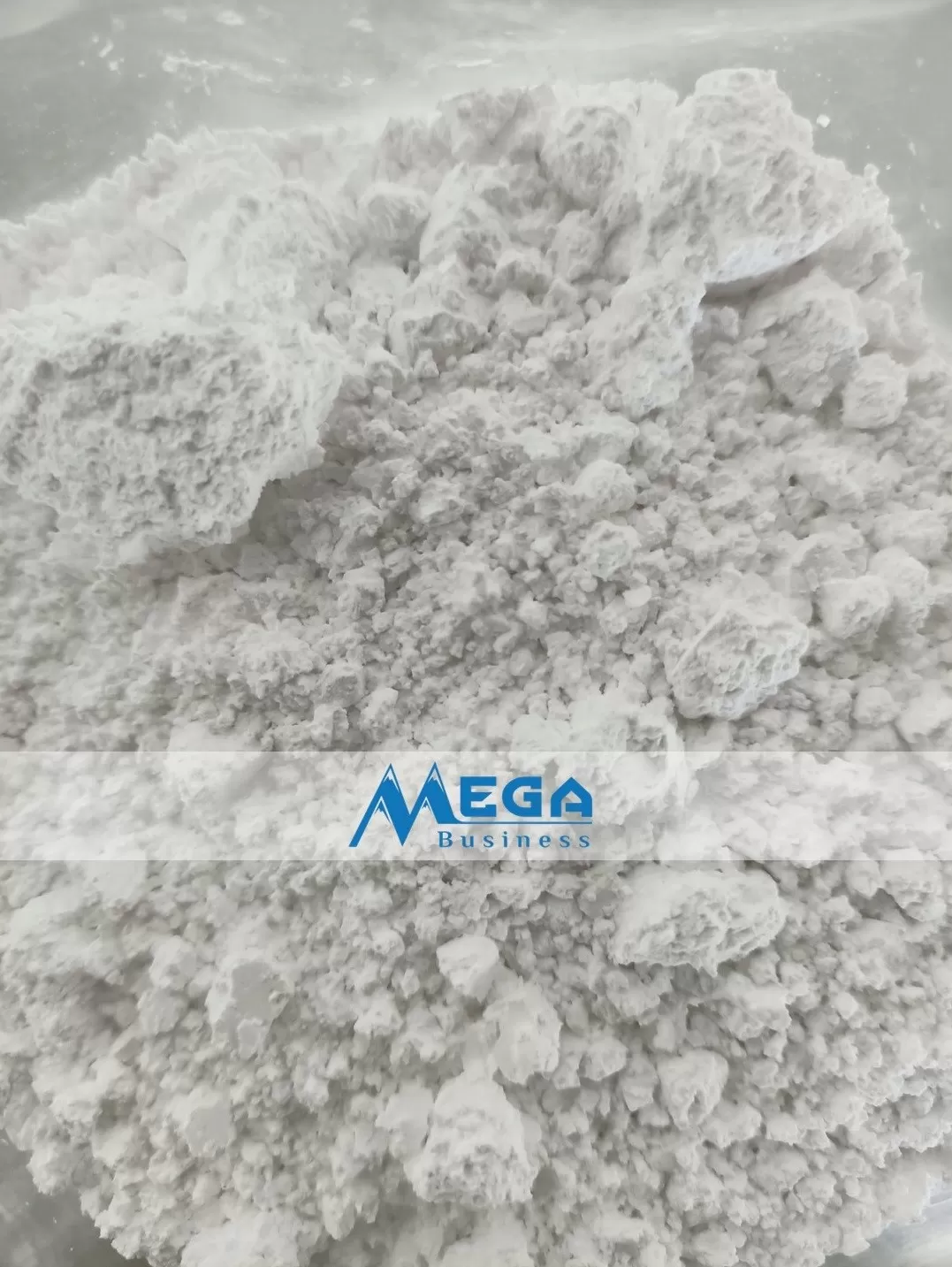
Zinc borate is an inorganic compound containing zinc, boron and oxygen, commonly used as a flame retardant, heat stabilizer and performance enhancing additive for polymers and rubber materials. Thanks to its special chemical structure, zinc borate has the ability to interact with the polymer network, contributing to improving many mechanical properties and durability of the material.
In rubber mixing formulas, zinc borate is often used in concentrations from a few percent to tens of percent by weight depending on the technical requirements of the product.
MECHANISM FOR INCREASING THE MECHANICAL DURABILITY OF ZINC BORATE IN RUBBER
The mechanical durability of rubber materials depends on many factors such as the vulcanized network structure, the interaction between the filler and the rubber matrix, the ability to resist aging as well as the stability of the material during use. Zinc borate (Zinc Borate), although not the main reinforcing agent like carbon black or silica, plays an important role in optimizing the material structure, thereby contributing to improving the overall mechanical properties of rubber products.
1. Strengthen links in the rubber network
The vulcanization process is a decisive step in the mechanical durability of rubber materials. In this process, polymer chains are linked together through chemical bridges, forming a three-dimensional network that is resilient and resistant.
When added to a mixture, zinc borate can affect the vulcanization reaction environment through the presence of zinc ions. These ions support the formation and stabilization of cross-links between polymer chains, helping the network structure become more uniform. The uniformity of the vulcanized network helps limit stress concentration areas - locations where cracks or failure points often appear when the material is subjected to load.
In addition, zinc borate also contributes to maintaining the stability of these bonds under high temperature conditions or harsh working environments. Thanks to this, the material can retain its mechanical properties for a long time without significant deterioration.
As a result, rubber can achieve:
- Higher tensile strength.
- Better resistance to deformation.
- Elasticity is more stable.
- Resistance to cracking and mechanical damage is improved.
For products such as gaskets, technical seals or damping components, maintaining a stable network structure is the deciding factor in the product's service life.
2. Improves the dispersibility of fillers
In industrial rubber production, fillers are indispensable components to improve mechanical properties. The two most commonly used fillers are carbon black and silica.
However, filler particles tend to clump together due to surface attraction. When agglomeration occurs, the material will have areas with too high filler density and areas with too low density. This reduces the reinforcing effectiveness and creates weak spots in the material structure.
Zinc borate has the ability to improve the interaction between filler and polymer matrix through the mechanism of adjusting the contact surface between material phases. Thanks to that, the filler particles are distributed more evenly throughout the rubber mass.
Good dispersion brings many benefits:
- Increase the contact area between filler and rubber base.
- Improves the ability to transmit stress in materials.
- Limit the formation of stress concentration points.
- Reduces the risk of micro cracks.
When the material is subjected to tension or compression, the impact force will be evenly distributed throughout the structure instead of concentrated in certain locations. This helps significantly increase the tensile strength, tear strength and impact resistance of the product.
Especially in products that require high durability such as tires, conveyor belts or anti-vibration cushions, the ability of fillers to disperse evenly is a factor that directly affects the final quality of the material.
3. Increased abrasion resistance
Abrasion is the process by which materials gradually lose mass or damage their surfaces due to the effects of friction, impact or repetitive motion. This is a common cause of reducing the lifespan of many industrial rubber products.
Zinc borate helps improve wear resistance through enhancing the stability of the material structure. When the polymer chains are better linked and the fillers are more uniformly distributed, the rubber surface is more effectively able to resist mechanical impacts.
During friction, the energy generated is evenly dispersed in the material instead of concentrated at local points. This helps reduce the rate at which small cracks form on the surface and slows down the process of material peeling.
Besides, zinc borate also helps limit the deterioration of mechanical properties due to heat generated from friction. For continuously working parts such as conveyor belts, rollers or tires, increased temperatures can soften the material and accelerate wear. Thanks to its thermal stability, zinc borate helps maintain the hardness and durability of rubber under prolonged working conditions.
Practical benefits include:
- Reduces surface wear rate.
- Increase product life.
- Maintain working performance for a long time.
- Reduce maintenance and replacement costs.
This is why zinc borate (zinc borate) is often used in technical rubbers that require abrasion resistance and long-term durability.
EFFECTS IN RESONANCE WITH OTHER ADDITIVES
A notable characteristic of zinc borate is its ability to function effectively when combined with other additives in rubber formulations. Instead of acting alone, zinc borate can create a synergistic effect with reinforcing agents, antioxidants and flame retardants.
When combined with carbon black or silica, zinc borate contributes to optimizing the microstructure of the material, helping to maximize the reinforcing effect of these fillers. At the same time, zinc borate's thermal stability and antioxidant properties help protect the polymer network structure from deterioration during use.
Thanks to this resonance effect, rubber materials not only achieve higher mechanical strength at the time of production but also maintain those properties throughout the product life cycle. This is especially important for industrial, automotive, power and construction applications, where material longevity is required for many years under harsh working conditions.
Zinc borate is a multifunctional additive that brings many benefits to rubber materials. In addition to its outstanding role in fire resistance and thermal stability, this compound also helps to significantly improve mechanical strength through strengthening the polymer network structure, enhancing filler dispersion and reducing the material aging rate. Thanks to these advantages, zinc borate is increasingly becoming an important ingredient in modern technical rubber formulas, meeting increasing requirements for durability, safety and product longevity.
>> Watch now Zinc Borate (Zinc Borate) here <<
>> See more Zinc stearate <<
>> See more Epoxy resin <<
MEGA VIETNAM GENERAL TRADING COMPANY LIMITED
Address: Floor 2-A2-IA20, Nam Thang Long Urban Area, Ward. Pham Van Dong, Phu Thuong Ward, City. Hanoi.
Email: contact@megavietnam.vn; Tel: (+84) 24 375 89089;
Website: megavietnam.vn; Hotline: 1800.577.728; Zalo: 0971.023.523