Surface damage, peeling paint film or cracked structures are always terrible nightmares for construction units and industrial paint factories. In the construction chemical industry, controlling the quality of coatings depends greatly on how we understand and apply core materials: Epoxy resin.
However, not all plastic lines provide the same results for all applications. Production reality shows that many businesses are encountering serious technical errors simply because of choosing the wrong plastic system or not understanding the relationship between molecular weight and toughness of polymer films. To help R&D engineers and managers optimize production formulas, this article will in-depth analyze the three most common failures of coating films and how to choose standard material lines from Mega Vietnam to thoroughly overcome them.
1. The coating film is brittle, cracked and has poor bearing capacity
The first and most common failure is the phenomenon of the coating becoming brittle, cracking and having poor bearing capacity after a short time of operation. The root technical cause of this problem comes from the fact that the resin system has too low molecular weight, leading to high cross-link density. (cross-linking density) When cured, it becomes too dense.
A network structure that is too tight makes the plastic membrane stiff, lacking the necessary flexibility to expand and contract with the temperature fluctuations of the concrete or metal surface below. Under the impact of heavy loads or weather changes, the accumulated internal stress will cause the paint film to immediately tear.
To handle the balance problem between surface hardness and mechanical tensile strength, engineers need to prioritize the use of standard liquid resins with a stable epoxy equivalent index.
In this segment, line Epoxy resin SM828 from the Korean brand Kukdo is considered a core solution thanks to its excellent mechanical features. This product helps the membrane system after curing achieve optimal tensile strength and impact resistance, thereby minimizing the risk of cracking under the load of forklifts or factory machinery.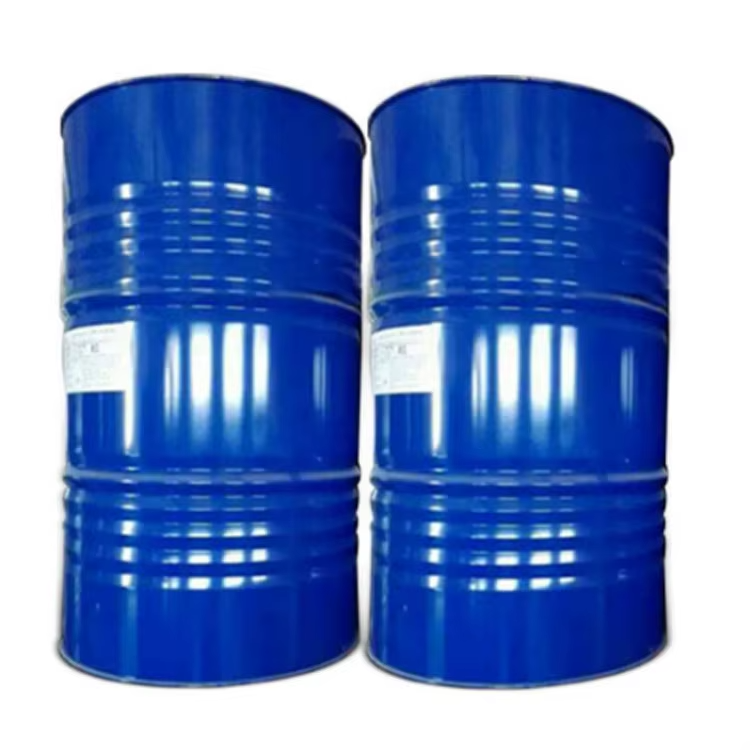
2. Loss of adhesion and peeling on vertical metal surfaces
Besides the phenomenon of cracking, loss of adhesion and peeling of paint film on flat, vertical metal surfaces is also an equally difficult problem. Conventional liquid epoxy resin systems possess quite high viscosity, making it difficult for them to completely wet the surface and create mechanical anchor bonds on smooth iron and steel substrates. Even if intentionally diluted with a high concentration solvent to make a thin anti-rust primer, the paint film will easily experience sagging before the curing reaction can occur.
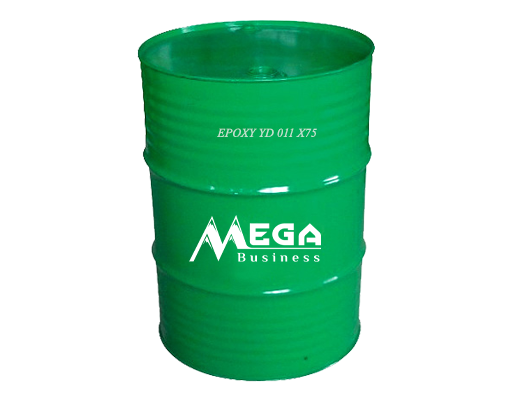
For heavy structural protection applications such as ship painting or steel structure painting for export, experts are forced to switch to solid plastic systems that have been pre-cut with solvents. The perfect technology solution for this segment is the product Epoxy resin YD 011 X75.
Thanks to 75% solid content being pre-dissolved in Xylene solvent, the large molecular structure of this plastic line provides outstanding toughness. From there, the product creates extremely durable adhesion on the metal substrate and absolutely prevents the penetration of corrosive agents.
3. Challenges from surface porosity and uneven color development
A third technical challenge that frequently appears during the construction of self-leveling floor paint is surface porosity and uneven color of the paint film. The phenomenon of leaking air bubbles or creating pinprick pits occurs when the resin system has too high a kinematic viscosity, causing air bubbles generated during the process of mixing the curing agent to be trapped inside the paint film and unable to escape to the surface before gelation.
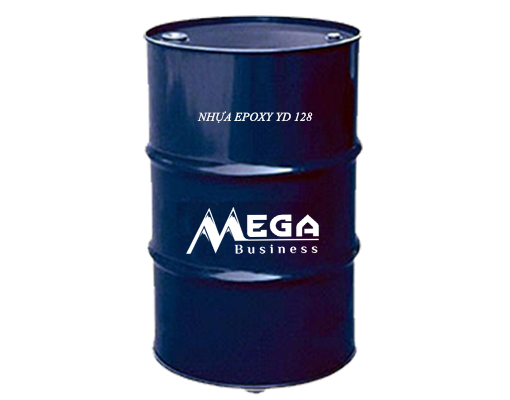
This requires manufacturers to look for a liquid resin line with good filler dispersion ability and flexible viscosity control. Besides code SM828, factories that produce floor paint and block pouring are now often given priority Epoxy resin YD 128 to adjust the formula.
The stable nature of this resin line helps the paint system achieve ideal leveling, helping air bubbles escape quickly. Thanks to that, the finished plastic film is always flat and smooth like a mirror and completely eliminates aesthetic defects.
4. Epoxy Resin Solution from Mega Vietnam
In short, the core secret to optimizing the quality of industrial coatings lies in thinking about scientifically classifying and packaging material solutions according to two big principles:
-
For high compression applications: For items that require large thicknesses such as self-leveling floor paint, composites or structural adhesives, alternate use of standard liquid resin pairs is recommended. Epoxy resin SM828 or Epoxy resin YD 128 will guarantee the quality of the project.
-
For corrosion protection applications: High-end protective coating segment for metal surfaces, solvent-cut solid plastic lines Epoxy resin YD 011 X75 is the universal key to ensuring the paint film does not peel off.
Chemical engineering has no place for sentimentality. Choosing a genuine supply source with consistent specifications between shipments from reputable distributors like Mega Vietnam is a prerequisite to help businesses save hundreds of millions in incident warranty costs, while also helping your products stand firm in today's fierce market.