WHAT IS REVERSE WATERPROOF PAINT?
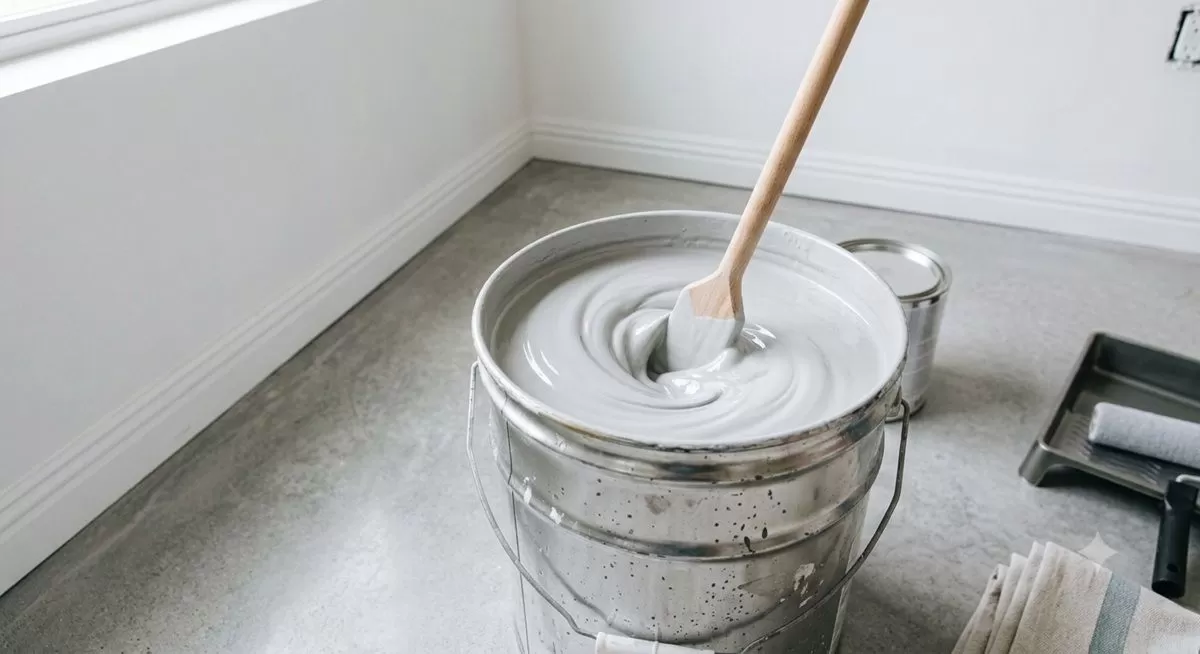
Reverse waterproofing paint is a type of waterproofing material that is applied on the surface opposite the water source causing seepage. In other words, instead of blocking water from the outside of the structure, the product will be applied from the inside of the structure to counter water pressure penetrating from the other side.
For example, when the basement is flooded with water from the soil outside but it is not possible to dig the soil to treat the outside of the wall, reverse waterproofing paint will be applied directly on the wall surface inside the basement to prevent water from penetrating into the used space.
Unlike conventional waterproofing paints, reverse waterproofing paints must be able to withstand negative water pressure, have high adhesion and be able to bond firmly with concrete or mortar.
OPERATIONAL PRINCIPLES OF REVERSE WATERPROOF PAINT
Reverse waterproofing paint works based on the mechanism of forming a waterproof membrane or crystalline layer inside the material structure. When properly constructed, the waterproofing layer will prevent water from penetrating through capillaries, small cracks and pores in the concrete.
Some cement-based products also have the ability to react with moisture and free compounds in concrete to form insoluble crystals. These crystals grow deep into the structure, helping to seal the water path and improve long-term waterproofing.
Thanks to this mechanism, the structure can resist water pressure from the opposite side without having to directly approach the source of seepage.
ADVANTAGES OF REVERSE WATERPROOF PAINT
One of the biggest advantages of reverse waterproofing paint is its ability to handle hard-to-reach locations. This is especially useful for projects that are completed or located below ground.
Besides, the product also brings many other benefits such as the ability to withstand negative water pressure, high durability, and limit the growth of mold and moss on wall surfaces. Construction is also relatively convenient because there is no need to demolish too many existing structures.
Many modern reverse waterproofing paints are also resistant to alkali, anti-corrosion and maintain protective effects for a long time, helping to significantly reduce construction maintenance costs.
POSITIONS OFTEN USING REVERSE WATERPROOF PAINT
Reverse waterproofing paint is often applied to items that are at risk of being exposed to water pressure from the outside but are difficult or impossible to handle from the positive side. Some popular locations include:
Basements of civil and industrial buildings are often subject to groundwater pressure from surrounding soil.
The elevator pit is located below the foundation level, making it easy for water to seep through the concrete walls and bottom.
Underground water tanks, technical tunnels or underground structures.
Adjacent walls cannot access the exterior for waterproofing.
Renovation and repair works have prolonged water seepage but construction conditions are limited.
DISTINGUISHING FORWARD WATERPROOF AND REVERSE WATERPROOF
Forward waterproofing is the method of constructing the waterproofing layer on the same side as the water source. This is the preferred solution to be applied right from the construction phase because of its high protection efficiency and reduced pressure on the structure.
Meanwhile, reverse waterproofing is used when forward waterproofing cannot be performed or when the project has been completed. Due to having to resist water pressure from the opposite side, requirements for materials and construction techniques are often higher.
Although forward waterproofing is still the optimal solution, in many real cases, reverse waterproofing is the most feasible and cost-effective option.
NOTES WHEN APPLYING REVERSE WATERPROOF PAINT
To achieve maximum effectiveness, the construction surface needs to be completely cleaned, removing old paint, dirt, grease and weak concrete parts. Cracks, voids or joints need to be treated before applying the waterproofing layer.
Choosing the right product for the level of water absorption and actual water pressure is also very important. For locations subject to high water pressure such as basements or elevator shafts, specialized materials that can withstand high negative water pressure should be used.
In addition, it is necessary to strictly follow the manufacturer's instructions on mixing ratio, coating thickness and curing time to ensure long-term waterproofing effectiveness.
Reverse waterproofing paint is an effective solution for projects that have difficulty waterproofing the exterior. With the ability to resist negative water pressure, protect concrete structures and prolong the life of buildings, this material is being widely used in items such as basements, elevator pits, underground water tanks and adjacent house walls.
Choosing the right product and applying the right construction techniques will help completely overcome water seepage, while also reducing repair and maintenance costs in the future.
>> See more Paint industry chemicals <<
>> See more Epoxy resin <<
>> See more Zinc borate <<
>> See more Longoil alkyd resin <<
MEGA VIETNAM GENERAL TRADING COMPANY LIMITED
Address: Floor 2-A2-IA20, Nam Thang Long Urban Area, Ward. Pham Van Dong, Phu Thuong Ward, City. Hanoi.
Email: contact@megavietnam.vn; Tel: (+84) 24 375 89089;
Website: megavietnam.vn; Hotline: 1800.577.728; Zalo: 0971.023.523